top of page

Belle Mead Pre-Med Student Indicted on Aggravated Manslaughter Charges in Fatal Crash

43 minutes ago
7 min read

By Barbara A. Preston for The Montgomery News | October 29, 2026


A Somerset County Grand Jury indicted a Belle Mead pre-med student of Aggravated Manslaughter with Extreme Indifference (1st degree) on October 22, a charge that could carry up to 30 years in prison. 


Two additional charges: Reckless Death by Auto (2nd degree) and Knowingly Leaving the Scene of a Motor Vehicle Accident resulting in Death (2nd degree) could add an additional 10 to 20 years in prison if the 18-year-old college student — Siddartha P. Surapanani — is found guilty in a court of law.


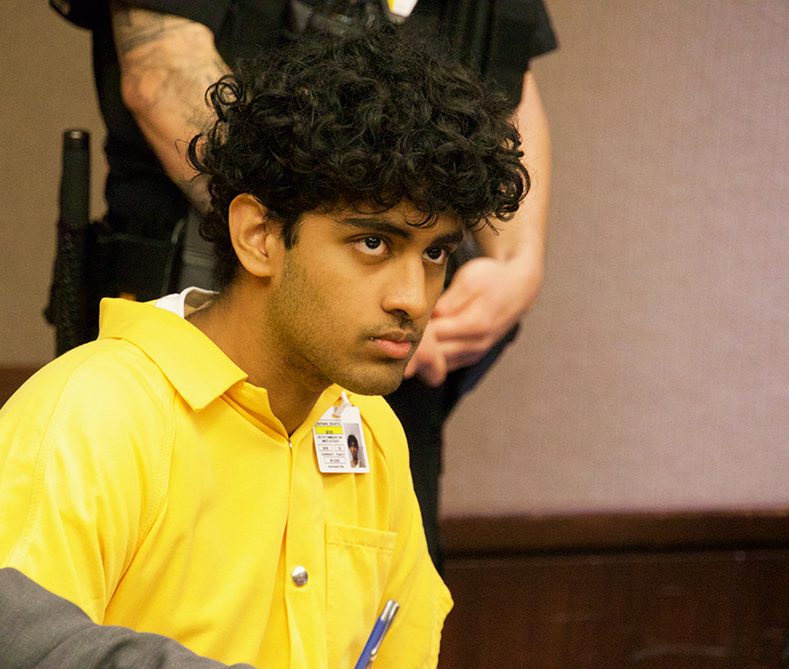
Siddartha P. Surapanani of Belle Mead in Somerset County Court.  © Barbara A. Preston for The Montgomery News.
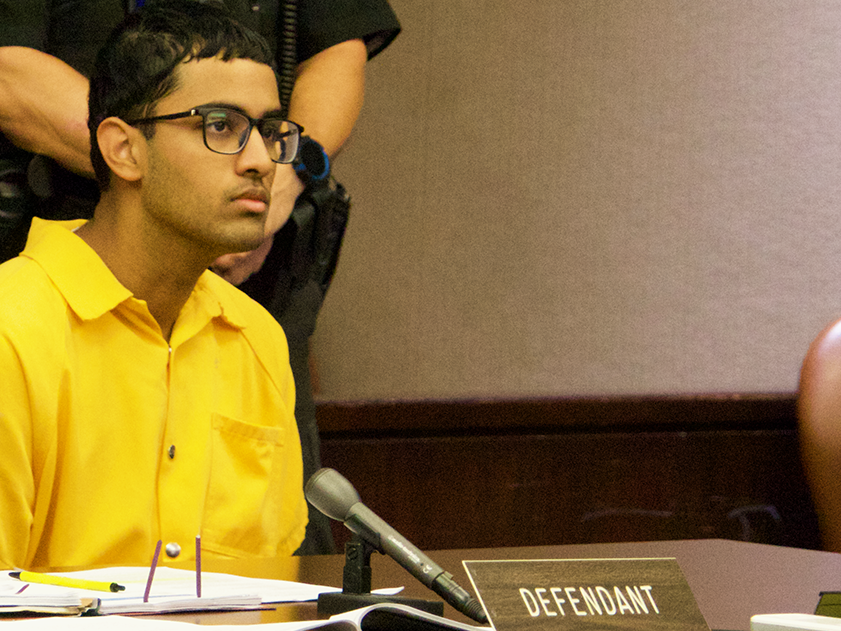
Above: Siddartha P. Surapanani at Somerset County Courthouse on August 14, 2026. Below: Surapanani in court on September 11, 2026. Photos by Barbara A. Preston
Siddartha P. Surapanani of Belle Mead in Somerset County Court, Sept. 11, 2026.  ©Barbara A. Preston for The Montgomery News.

Surapanani is scheduled for a post indictment arraignment on Nov. 9 in Somerset County Courthouse before Judge Peter Tober. At the arraignment, Judge Tober is expected to read the official criminal charges against the defendant, explain constitutional rights, address release or custody status, and ask the defendant to enter an official plea (guilty, not guilty, or no contest). The defendant has initially pleaded not guilty, but that could change now that a grand jury composed of a panel of citizens has reviewed the prosecutor's evidence and decided there is enough probable cause to send the case to trial.


The charges stem from the morning of July 27, when prosecutors say Surapanani drove erratically for 15 miles along Route 202 beginning in Flemington and ending in Raritan, when video footage recorded him running a red light at First Avenue and striking a vehicle. The accident killed  Deepa Sripathy, 44, of Bridgewater. Her husband, Ramakrishna, and two daughters, Harshitha (20) and Samsmitha (16), were present in court on September 11, along with their extended family, filling the entire left side of the courtroom. The defendant’s family, including the grandparents who helped raise him, filled rows on the right side of the court. 


Advertisement


Surapanani, a recent Montgomery High School graduate and pre-med student at Seton Hall University, last appeared before Superior Court Judge Tober on September 11. During the hearing, Surapanani's lawyer, Michael B. Roberts, said his client was recently diagnosed with bipolar disorder and has no memory of the four days surrounding the car crash, which killed a 44-year-old Bridgewater woman.


Roberts was not immediately available for comment when The Montgomery News reached out to him for this article.


At the previous court hear, Roberts had asked the judge to reconsider his decision to keep the defendant in Morris County Jail while he awaits trial. The defendant's family wants Surapanani to obtain treatment at a private wellness center. Judge Tober ruled Surapanani must remain in jail — where he is receiving treatment. 


Information Released in Court Thus Far

  • Defense: Surapanani presented that he did not remember anything of the four days surrounding the fatal car crash.

  • Defense: Surapanani said he did not sleep for the four days prior to the crash.

  • Prosecutor: Surapanani was fully aware of what he was doing, and pointed to a statement in a court document in which Surapanani reported he had to make a momentous decision, “where he felt he had to choose between crashing into a gas station, or hitting … cars.” 

  • Prosecutor: There was a preliminary finding at the hospital of marijuana, THC, in Surapanani’s urine.

  • Toxicology reports are still pending.

  • Defense: There is no proof Surapanani had THC in his system at the time of the crash.


Somerset County Asst. Prosecutor John Ascione had said in court that there was THC in Surapanani's preliminary urinalysis from the hospital. Surapanani had a mandatory drug screening, according to court records, but results have not been made public. 


Advertisement


Defense Attorney Roberts debated the significance of the prosecutor’s mention of the THC/marijuana.


“The state mentioned a urinalysis. They have provided no proof that my client had THC in his system,” Roberts told The Montgomery News.


In fact, there are many flaws in tests used to identify serious marijuana-based impairment. 


“The science is fairly clear that the presence per se of cannabinoids in bodily fluids ‘provides little, if any, information concerning behavioral impairment,’” according to the Journal of Studies on Alcohol and Drugs.


According to the National Library of Medicine, “A positive assay result does not necessarily indicate recent use. The duration of action of delta-9-tetrahydrocannabinol (THC), the key active component in cannabis, is several hours. However, the detection interval of THC-COOH is much longer than the duration of action of THC. The most precise time frame for cannabis use to result in a urine test positive for THC-COOH varies widely depending on cannabis use history and individual characteristics (such as adiposity). In chronic heavy users, THC-COOH may be detectable for a month or longer after cannabis was last introduced into the body.”


The Prosecutor's Case

Somerset County Asst. Prosecutor John Ascione said in court on Sept. 11 that Defense Attorney Roberts appears to be setting up a trial defense.


“Saying this [Surapanani] apparently was unaware of what he was doing at the time, that is an NGRI [Not Guilty by Reason of Insanity] trial defense to be determined by a jury for an ultimate decision. At this point, your honor, we are not even close to that. The investigation in this matter is ongoing. There are still many reports to be reviewed, many other expert matters to be considered, and significantly, the toxicology of his blood is still pending.”


Regarding the preliminary report of THC in Surapanani’s preliminary urinalysis and whether Surapanani was aware of his actions during the fatal car crash, Ascione said they were inconsistent with the character letters, and the picture presented of this defendant at the detention motion hearing. 


“The picture presented [was] that he was a calm, intelligent, mature, responsible person,” he said. “He now has suddenly become the opposite. …. Your honor, it's clear to the state, and the state would submit, again, if your honor recalls the facts, this defendant drove … down Route 202, with the first 911 call coming from someone, uh, at or near Flemington, describing [his] erratic driving behavior. 


“He drove at a high speed for 15 miles or so … into oncoming traffic, through other vehicles … in very dangerous maneuvers, including one, as described by a witness, passing between a witness's vehicle and a light pole at a red light. And now claims he was incapable and unaware of what he was doing. And I'd submit, if he was unaware of what he was doing, he probably would have crashed that vehicle, not 15 miles later, but within the first 15 seconds of taking control of it,” Ascione said. 


“I'd ask that this court deny this motion [to release Surapanani from jail to a private wellness center]. The defense has further not presented any evidence that the defendant is not receiving adequate treatment in the [jail] facility now, or that any release is required. And for those reasons, your honor, the state asks the court to deny the motion.”


Advertisement


Defense Attorney's Request

Defense Attorney Roberts asked the judge to reopen Surapanani’s detention hearing, which the judge allowed, in order for his client to receive the best care for his mental illness in the least restrictive environment.


During the hearing, Roberts did say Surapanani is being treated while in jail, and is doing much better than before his recent diagnosis. He is currently taking Zyprexa (an antipsychotic medication used to treat schizophrenia and bipolar I disorder), Remeron (an antidepressant medication used primarily to treat Major Depressive Disorder), and Depakote (an FDA-approved medication for patients with acute bipolar mania.)


On August 14, the court held that Surapanani be held in Morris County Jail, citing a danger posed to the community and the risk that the defendant might obstruct the criminal justice process. Surapanani, if allowed to return to his Belle Mead home, was deemed to be a flight risk due to wealthy ties in India and Somerset County.


Roberts presented a variety of reports and attachments, including medical records, transcripts, documents from Wellness Recovery Center in West Windsor, a psychological evaluation from Gold Psychological Services in Manville, and Dr. David Goldstein's CV.


“We're about six weeks into custody,” Roberts said. “The family was able to locate an appropriate facility — the Wellness Recovery Center in West Windsor. They are state-accredited, and they have inpatient and outpatient services. I was able to speak to the director, … he will be under 24-hour, 7-day a week care … as he continues to stabilize."


Regarding the flight risk, Roberts said the family would surrender Surapanani’s U.S. passport to the court, and his client also offered to wear electronic monitoring.


“I'm not asking this court to simply release him and hold out for the best, but to release him into that structured inpatient facility. There's no question of the diagnosis — bipolar disorder with psychotic features. They will transport him directly from the jail to their facility, and only upon, you know, further stabilization, would he be discharged. … And at that point, judge, I would ask for home detention.”


Advertisement


The Judge's Concerns

The factor that looms the largest, Judge Tober told the court, is the protection of the community, and will Surapanani be a danger to others.


“When I read the Gold Psychological Services Report — I understand why the defense submitted this — but I'm having almost deeper concerns,” he said.  “Now we see he was not just having a sudden break the day of the incident, but he was acting, and I don't say this in a derogatory fashion, ‘strangely.’... A month before this, others noticed he was acting odd. His friend noted he was driving, oddly, the night before.


“I know the grandparents who take care of him had medical training, and they would be good reporters, but they didn't notice anything. I'm going to read from the report on page 12. The grandparents said it was strange looking back, as he seemed to be delusional. They recounted a specific incident at a shopping mall where he attempted to make a large purchase. And it was like a $700 bill at [Krauszers] or something like that.


“So I think there is just still too much to treat here,” the judge said. “And this is why I raised the question of competency, because when someone's competency is questioned, the court can keep them in jail, and arrange for either a private or state … psychiatrist to go interview them and see whether or not he’s competent.”


Both sides are saying Surapanani is competent.


Ultimately, Judge Tober decided not to release Surapanani from jail because he questioned the security of the proposed private wellness facility, and compared it to Greystone Park Psychiatric Hospital, a 506-bed psychiatric hospital in Morris Plains. Greystone has three security levels. Patients are either locked into a floor, locked into their room, or locked into the building, depending on diagnosis.


“I’m concerned that if I grant the defendant's motion, and release [Surapanani] to the Wellness Recovery Center, that he walks out the door the next day."


Given the severity of Surapanani's mental illness, which is now in detail, the judge said he would not release him from jail, pre-trial, because it would not adequately address the dangers to the public.


bottom of page