The Montgomery News
6 days ago6 min read


The Montgomery News
Oct 71 min read


The Montgomery News
Oct 72 min read


The Montgomery News
Oct 72 min read


Updated: Feb 27
By Barbara A. Preston for The Montgomery News | Updated Feb. 27, 2026 (Posted Feb. 26, 2026)
U.S. Supreme Court Justice Samuel Alito Jr. on Feb. 24 has denied a bid by 29 New Jersey suburban towns — including Montgomery Township — to halt the New Jersey law ordering them to allow for more affordable housing in their communities.
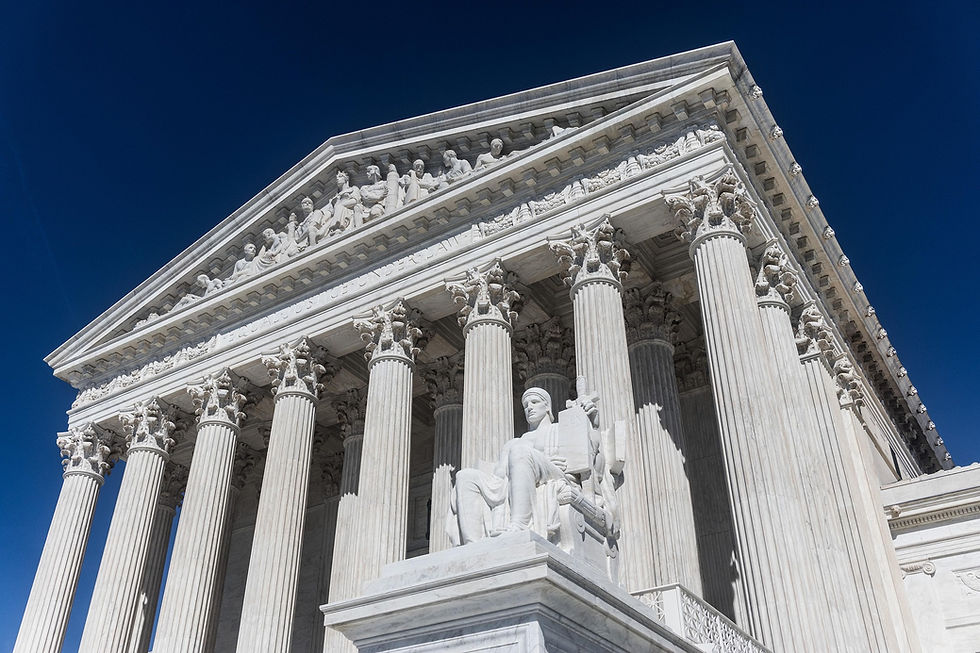
Photo by Mark Thomas (Pixabay)
Justice Alito is widely recognized as the most consistently conservative member of the Supreme Court, often acting as the anchor for the Court’s right wing. Appointed by George W. Bush in 2006, he has a reputation for deeply conservative and traditionalist views, influencing major decisions on abortion, religion, and federal power — and now on New Jersey's affordable housing mandate. Alito Jr. grew up in Hamilton Township, a suburb of Trenton. He attended Steinert High School, where he graduated in 1968 as the class valedictorian, subsequently matriculating at Princeton University.
According to New Jersey Spotlight:
Alito, who once served as N.J.’s top federal prosecutor, summarily rejected the plea of “Local Leaders for Responsible Planning (LLRP)” to stay a March 15 deadline for implementation of the law.
It’s the fourth straight loss for the group in both state and federal courts.
In April of 2024, then Gov. Phil Murphy signed a sweeping remake of the state’s mandate that each town provide for a “fair share” of the region’s affordable-housing burden in their communities.
The coalition, comprising 29 towns mostly in the state’s wealthy northern suburbs, says the law will lead to over-development and imposes an unfair burden in added costs for infrastructure and services.

Photo by Barbara A. Preston
LLRP had filed an application on Feb. 4 asking the US Supreme Court to suspend a state law that requires communities to adopt the state's newest affordable housing assignments with resolutions and ordinances by March 15.
"NJ Attorney General Jennifer Davenport has opposed the towns' application for an injunction. Currently, only municipalities that meet the March 15 deadline will retain their immunity from so-called "builder's remedy" lawsuits. Municipalities who don't comply face proposals from developers that do not have to conform with the town's master plan or zoning ordinances," according at an article in The Bergen Record.
The Montgomery News reached out to Montgomery Mayor Neena Singh and Township Administrator and Planner Lori Savron for a comment.
Mayor Singh said: “Montgomery has always been in the forefront for providing its fair share of affordable housing. Nevertheless, we joined the municipal litigation because we disagreed with the tight timelines of the current regulations. We are extremely disappointed that the U.S. Supreme Court denied the application for an emergency injunction that would have allowed us more time.
“We continue to work with the other municipalities to urge our legislators to consider a system that allows us to keep the character of our community and enough time to fully develop a compliance plan prior to having to adopt it.”
Advertisement

The NJ Fair Share Housing Center, a nonprofit advocacy organization that uses legal, policy, and community-building strategies to ensure the state has more affordable housing, released the following comment on the Supreme Court ruling:
“This was a far-fetched effort to undermine and delay a law that is already working wonders,” said Joshua Bauers, director of exclusionary zoning litigation at Fair Share Housing Center.
“At every level — state courts, federal district court, the Third Circuit, and now the U.S. Supreme Court — these arguments have been rejected. The overwhelming majority of municipalities are embracing New Jersey’s affordable housing law and moving ahead with implementation. With the Supreme Court rejecting this appeal, it’s time to focus on creating the affordable homes New Jerseyans urgently need,” he added.
The LLRP maintains:
"The law will lead to over-development and imposes an unfair burden in added costs for infrastructure and services." – Local Leaders for Responsible Planning